
Dr. Gloria Ortiz Ramirez Enhances Education and Appreciation for a Puerto Rican Nature Reserve
My STEM Ambassador project is taking place in the Corredor Ecológico del Noreste (CEN) Reserve in Luquillo, Puerto Rico, a protected coastal ecosystem co-managed by the community-based organization Coalición para la Protección del CEN and the Department of Natural and Environmental Resources (DRNA). The Coalition, established in 2005, plays a key role in conservation, education, and community engagement. I have collaborated with this group in the past and continue to work with them through my postdoctoral research within the Reserve. This ongoing relationship has allowed me to observe their essential work in protecting the area and educating visitors. The Reserve receives both local and international tourists, yet it lacks interpretive guides or materials that help visitors understand and appreciate what they are experiencing.
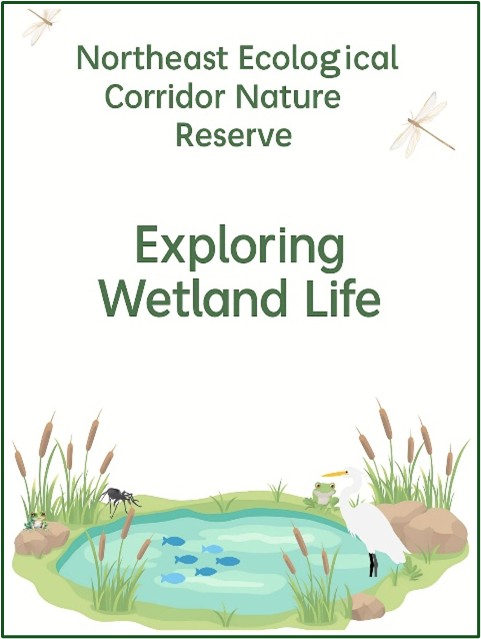
The project Exploring Wetland Life was developed to address this gap by creating a bilingual, interactive exploration log that promotes environmental awareness and supports the Coalition’s conservation mission. The material is designed as an accessible tool for education and outreach, especially valuable given the organization’s limited staff and funding. The project focuses on developing the Exploring Wetland Life interactive logbook, a digital and printable tool compatible with mobile devices. The logbook includes prompts, illustrations, and reflection activities that encourage visitors to observe, listen, and connect emotionally with nature. The material is being co-reviewed by the Coalition and DRNA to ensure scientific accuracy, cultural relevance, and accessibility for both Spanish- and English-speaking audiences. A QR code system will allow visitors to access the tool during guided walks or independently along the trail.
In addition to the interactive logbook, I am assisting in preparing a training script to help environmental interpreters lead educational walks through the Reserve. The script complements the logbook by providing a consistent interpretive narrative that highlights key ecological concepts, species interactions, and conservation messages. This resource will enable the training of new interpreters and volunteers, ensuring that guided tours communicate accurate and engaging information. Both materials are currently in the review stage and will be piloted once community conditions allow.
Preparation for this project began with meetings with Coalition Director Nilda García, biologist Rosaly Ramos, and Reserve Manager Ricardo Colón. These conversations revealed both opportunities and constraints, limited resources but strong community commitment and a shared interest in developing accessible educational tools. Working collaboratively, we reviewed the proposed outreach materials and advanced their development. The STEMAP design process encouraged me to co-create rather than simply deliver, a principle that continues to shape every stage of this project.
Originally, the public presentation of the interactive PDF was scheduled for November 2025. However, after the government announced a new policy promoting urban and tourism development on Reserve lands, the Coalition requested postponement. The proposed policy shifted all local efforts toward organizing actions to prevent such developments and defend the ecological integrity of the Reserve. In response, I was asked to focus my efforts on documenting the ecological functions of the Reserve and developing educational visuals and videos to communicate why protecting these ecosystems is so important. These materials are being used to strengthen community communication campaigns and public awareness. Although the delay altered the project’s original timeline, it reinforced its purpose, transforming it from an educational tool into a platform for conservation advocacy.
This ongoing process has been deeply transformative. Working with the Coalition has shown me that community engagement is not separate from research; it is a fundamental part of it. Co-creation requires patience, listening, and respect for community knowledge. It has taught me that scientific work achieves its fullest value when it becomes a bridge between data and public understanding. The trust built through this collaboration has been one of the most rewarding aspects of the project. The main challenge, however, has been maintaining momentum amid shifting political conditions that directly affect conservation priorities. Despite these challenges, the collaboration continues, and the materials will be completed and tested once the Coalition finalizes its community action plans for the coming year.
As a result of this experience, I was inspired to continue strengthening my skills in communication and design. I enrolled in an online Digital Marketing certification program to learn how to develop interactive tools that make scientific information more accessible to the public. This experience opened a new professional path for me, combining science, technology, and education to promote conservation. Moving forward, my goal is to continue developing bilingual and interactive materials that can be adapted and shared across the Caribbean to support regional environmental education initiatives.
I am deeply grateful to the Coalición para la Protección del Corredor Ecológico del Noreste, to Rosaly Ramos, Nilda García, and Ricardo Colón for their openness and collaboration; to Joeshliann Huertas Cruz, whose work in design and coordination has been essential to the development of the logbook; to Corinne Ryan and the entire STEM Ambassador staff for their continued guidance and encouragement; and to my mentors, Dr. Elvira Cuevas and Dr. María Fernanda Barberena, whose mentorship continues to inspire my work at the intersection of ecology, education, and community engagement. This project has opened new perspectives and reaffirmed my commitment to conservation through collaboration, creativity, and education.
About the Blog
Discussion channel for insightful chat about our events, news, and activities.
Categories
Featured Posts
Tag Cloud
- SLCC (1)
- career exposure (1)
- college students (1)
- library (2)
- climate (1)
- teenagers (1)
- UNLV (1)
- radiochemistry (1)
- high school (1)
- outreach (1)
- biology (1)
- elementary students (1)
- Puerto Rico (3)
- engineering (2)
- flood mapping (1)
- cricket (1)
- water (1)
- STEMCAP (1)
- tattoos (1)
- dinosaurs (1)
- microscopy (1)
- conservation (2)
- education (1)
- bilingual (1)
- UoG (2)
- Guam (2)
- ethnobotany (1)
- environmental policy (1)
- student immersion (1)
- Virgin Islands (1)
- USVI (2)
- lionfish (1)
- children's home (1)
- marine ecology (1)
- youth (1)
- sustainability (2)
- Utah (1)
- Arizona (1)
- Nevada (1)
- southwest (1)
- virtual (1)
- project management (1)
- training (1)
- naturalist (1)
- forest (1)
- ecosystem (1)
- Spanish (1)
- Huntington's (1)
- medical science (1)
- Emmanuel Ngwoke (1)